
Project Hail Mary Review
Project Hail Mary Review: Andy Weir’s Sci-Fi Masterpiece
“A brilliant mix of hard science and heart: why Andy Weir’s space odyssey is a modern classic.”
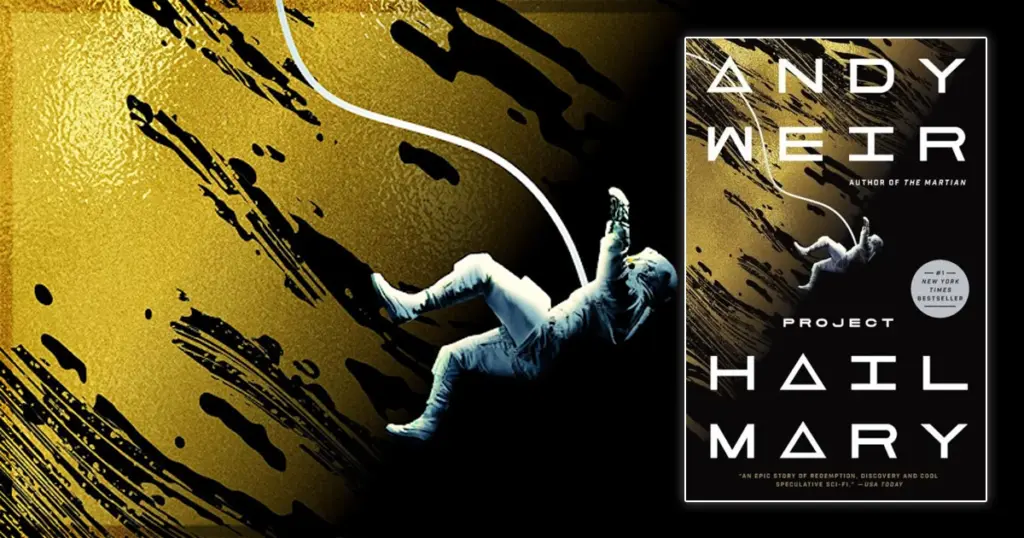
Project Hail Mary Review: Is This the Best Sci-Fi Movie Since The Martian?
Project Hail Mary Review: A Joyful, Hopeful Science Fiction Film That Feels Like a Breath of Fresh Air
Hail Mary is exactly the kind of science fiction movie the world needs right now. It does not wallow in misery or despair. It celebrates smart people solving impossible problems. And it delivers genuine wonder and excitement that feels rare and precious in today’s cinematic landscape. Let us break down everything that makes this film so special and so important.
A Movie That Triggers Pure Childhood Wonder
First of all, Project Hail Mary is directed by Phil Lord and Christopher Miller. And from the very first scene, it triggers something very deep and very personal in anyone who grew up loving science fiction. It carries that specific energy of discovering a brand new science fiction paperback for the first time. That feeling of pure excitement and breathless wonder that true science fiction fans carry with them their entire lives.
Furthermore, that sense of wonder is not an accident. The film is based on Andy Weir’s bestselling novel. And it captures something that so much modern science fiction has completely forgotten how to do. It makes you feel genuinely excited about science. It makes you feel genuinely hopeful about humanity. And it does all of that without stopping the story dead in its tracks to explain everything in a boring lecture format.
The Story: Smart People Saving the World From Microscopic Doom
Additionally, the premise of Project Hail Mary is both simple and absolutely terrifying. Microscopic creatures are eating the Sun. That process will lead to a catastrophic dimming of our star. That dimming will wreck the Earth’s economy. It will destroy ecosystems across the planet. And it will ultimately result in global mass extinctions on a scale humanity has never seen before.
Furthermore, down-and-out high school science teacher Ryland Grace is recruited by an international team of brilliant minds to help solve this problem. Ryan Gosling plays Grace with tremendous warmth and genuine likability. Grace eventually winds up completely alone on a spaceship called the Hail Mary. His mission is to investigate why the star Tau Ceti is not falling prey to the same phenomenon that is killing our Sun and several other stars in our celestial neighborhood. It is a classic science fiction setup delivered with real intelligence and real heart.
Why This Film Feels Like a Relief in Today’s World
Moreover, living in difficult and troubling times makes watching yet another dystopian science fiction film a genuinely exhausting experience. The latest Hunger Games installment, The Long Walk, Mickey 17, and the recent Running Man remake all explore dark and depressing futures. All the dystopian storytelling from decades of science fiction literature no longer feels futuristic. It feels like reportage.
Furthermore, Project Hail Mary is a direct and very welcome antidote to all of that darkness. It focuses on smart people working together. It celebrates international cooperation and scientific excellence and also presents the best minds on Earth collaborating across borders and languages to solve an impossible problem. That alone feels like a powerful and very deliberate message in the current political climate. There are genuinely utopian seeds in this film. The first glimmers of a real Starfleet. A cultural spark of hope and optimism that feels almost revolutionary right now.
How the Film Delivers Science Without Killing the Story
Additionally, one of the greatest achievements of Project Hail Mary is the way it handles its science. Classic science fiction storytelling had a very well-known problem. The narrative would stop completely dead while the author climbed onto a soapbox to explain the physics of an ion drive or the mechanics of gravity near a neutron star. Project Hail Mary solves that problem beautifully.
Furthermore, the film begins with the classic trope of the Lonely Astronaut. It is a Robinson Crusoe-like concept that echoes Twilight Zone episodes, Stanislaw Lem’s Solaris, and Alfred Bester’s The Stars My Destination. Gosling’s Grace wakes up completely alone on the Hail Mary. His brain and memories have been swiss-cheesed as a result of suspended animation. He does not know who he is. He does not know where he is. And he does not know why he is there.
Moreover, the genius of this storytelling approach is what happens next. As Grace slowly remembers who he is, he is simultaneously filling in all the backstory, exposition, and science that the audience needs to understand the story. The mystery of what is killing the Sun is revealed at exactly the same moment that Grace is piecing together the mystery of his own identity. Those nuggets of exciting scientific information that would ordinarily be explained by a guy in a lab coat to a room full of Pentagon officers instead serve to illuminate character. And that is what gives Project Hail Mary so much genuine heart and so much genuine emotional power.
The Performances, the Tone, and a Surprising Karaoke Scene
Furthermore, despite all the careful construction of character and exposition, Project Hail Mary has a very specific and very distinctive vibe. It feels kind of improvised. There is a looseness and an easygoingness to the storytelling that makes it feel surprisingly comfortable. Even though so much of the film takes place on a sterile spaceship many light years from Earth, it never feels cold or distant. It feels warm. It feels human. And it feels genuinely funny in ways that completely catch you off guard.
Additionally, directors Phil Lord and Christopher Miller were famously fired from the Han Solo movie several years ago. Reports at the time suggested they were dismissed for encouraging too much improvisation on set. Project Hail Mary gives audiences a very clear sense of the Han Solo movie that could have been. It is creative, playful, and genuinely surprising at multiple points throughout the story. And without giving anything away, Project Hail Mary proves conclusively and irrefutably that more science fiction films could greatly benefit from including a karaoke scene.
The One Significant Problem With Project Hail Mary
However, it would not be an honest review without acknowledging the film’s most significant weakness. Project Hail Mary is easily half an hour too long. Some careful and judicious cutting would improve the overall pacing considerably. A Thelma Schoonmaker-style restructuring and rearranging of certain scenes could make this already very good film genuinely great.
That is a real criticism and not a minor one. A tighter runtime would sharpen the emotional impact of the film’s best moments. And it would prevent certain sequences from overstaying their welcome in a way that slightly dulls the overall experience.
Final Verdict: A Film Worth Every Minute Despite Its Flaws
So, to wrap it all up, Project Hail Mary is a rare and genuinely special science fiction film. Its sense of wonder is infectious. Its heart is enormous, and performances are warm and deeply engaging. And its message of hope, cooperation, and scientific optimism feels genuinely important and genuinely necessary right now. The extra thirty minutes is a real issue. But the film’s warmth and its shimmering sense of possibility more than compensate for that excess. In times like these, a movie that actually makes you feel hopeful about humanity is something very precious indeed. And Project Hail Mary delivers that feeling in abundance from start to finish.